Built on Iron. Running Since 1839.
Introduction
Maybrey Precision Castings traces its commercial origins to 1839 when George England began researching and designing products . The facility in Aylesford from which we operate today is the inheritor of nearly two centuries of engineering expertise, and we have not forgotten where it began.
In the 1840s, a South London engineer named George England was building the locomotives that stitched together the railways of Britain, India, and Australia from a works in New Cross that occupied the same ground on which the foundry that became Maybrey would later grow. The castings we make today are different in scale and application from those early engines, but the principles are unchanged: precision metalwork, made by skilled hands, to a specification that matters.
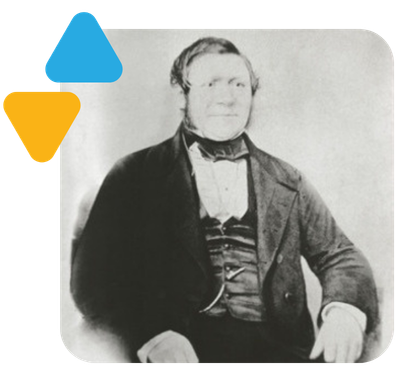
The Engineer: George England, 1811–1878
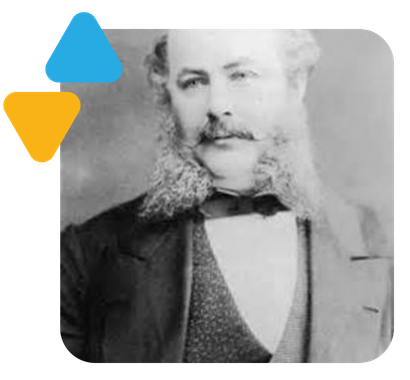
George England arrived in London from Newcastle at the age of fourteen to train as a marine engineer at the Penn Boilerworks in Deptford, one of the finest engineering workshops in the country. By 1839, with a patent screw jack and a weaving machine to his name, he had taken on a vacant factory just off the Old Kent Road in Hatcham and renamed it the Hatcham Iron Works.
He was not supposed to build locomotives. He was a tool-maker. But the railways were consuming everything Victorian engineering could produce, and England was not a man to limit himself to what he was supposed to do. He began his research and design in 1836.
In late 1848, the Mining Journal reported on his first trial engine, tested between New Cross and Croydon. The locomotive hit 45 miles per hour on its maiden run. His first production locomotive sold in 1849. By 1861 the works had been extended twice, a large house, Hatcham Lodge, had been built for his family, and a terrace of workers' cottages on Kender Street for his men.
The Great Exhibition, 1851
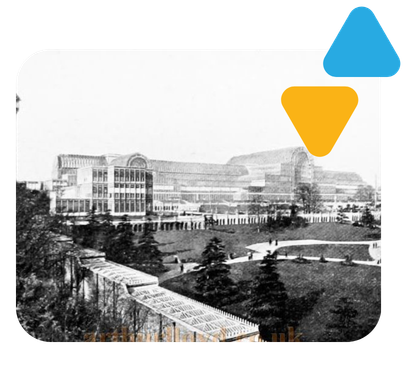
Two years after his first sale, England exhibited a locomotive at the Great Exhibition in Hyde Park. His engine, 'Little England', was awarded a Gold Medal for Excellence which was the highest prize the Exhibition conferred. The Crystal Palace building in which it appeared was itself partly built from castings produced at Hatcham. The works that made award-winning engines was also making the ironwork for the building that showcased them.
Building Britain's Railways and Beyond
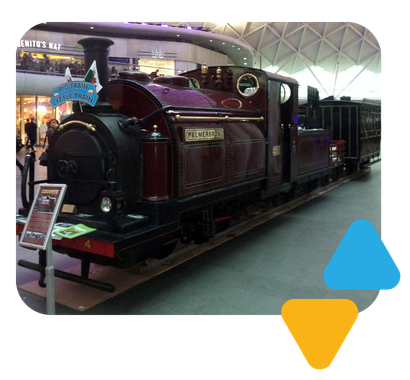
Over the following two decades, the Hatcham Iron Works despatched locomotives to the Great Western Railway, the Caledonian Railway, the Somerset and Dorset, the Wantage Tramway, and railways in Belgium, India, and Australia. One preserved example, 'Shannon', built at Hatcham in 1857, can still be seen at Didcot Railway Centre today.
Completing a locomotive at Hatcham came with an unusual constraint: the site had no rail connection. Finished engines were moved by horse and wagon to the nearest railhead at New Cross. By 1862, however, the works had been extended to include a private oval of test track at the rear, a circle of standard-gauge rail, nicknamed 'the cabbage patch', where new engines were run in steam before they left for their customers.
Robert Fairlie and the 'Little Wonder'
By the early 1860s, a frequent visitor to Hatcham Lodge was Robert Francis Fairlie, a Scottish railway engineer who had trained at Crewe and Swindon before working in India. Fairlie had developed ideas for a radical new locomotive: a single machine with two powered bogies, capable of pulling in both directions, navigating tight curves, and carrying twice the load of a conventional engine. He needed a manufacturer. England was already supplying locomotives to the Ffestiniog Railway in North Wales, making him the obvious partner.
The partnership became a family matter. Fairlie eloped with England's daughter Eliza Anne. The ensuing legal dispute, England brought a perjury charge, which collapsed though it did make it into the newspapers. However, despite this the professional relationship endured.
In 1869, the Hatcham Iron Works built 'Little Wonder' for the Ffestiniog Railway: the first successful Double Fairlie locomotive ever made. In 1870, before an audience that included the Imperial Russian Commission, Little Wonder was demonstrated against the railway's existing engines. It had more than double their power. The performance launched a revolution in narrow-gauge railway design and Fairlie locomotives were subsequently exported across the world. The Ffestiniog Railway still runs Double Fairlies today, direct descendants of the design first proven in iron at Hatcham.
A replica of one of the original George England locomotives for the Ffestiniog Railway is currently being built and is close to completion as reported in 2025. The design born at Hatcham Iron Works remains in active service on one of Europe's most celebrated heritage railways.
The End of an Era at Hatcham
England's workers struck in 1865, a dispute that proved the beginning of the end. He retired in 1869, handing the works to Fairlie and his own son, George England Junior. The partnership was short-lived. George Junior died in 1870 and Fairlie, losing heart, sold the works. The Fairlie Engine and Steam Carriage Company was wound up in 1872.
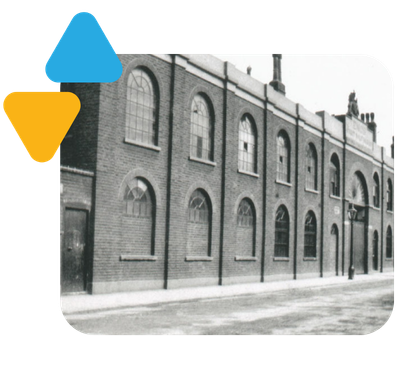
The building passed on. The 1853 extension was occupied from 1873 by the General Engine and Boiler Company. In the 1930s, that in turn became Reliance Foundry, the business that would eventually, through Douglas Hills, find its way to Maybrey.
From New Cross to Aylesford
The connection between George England and Maybrey Precision Castings was uncovered by chance and by a family connection of a different kind.
In the late 1980s, Douglas Hills merged his company, Hills Diecasting, with the Reliance Foundry. The premises in Greenwich still bore a plaque identifying the building as the former registered office of the General Engine and Boiler Company. Douglas's brother-in-law, Grahame Hood, was a railway enthusiast and recognised the address immediately: it was a direct link to George England and the Hatcham Iron Works.
Douglas and Grahame spent years researching and documenting England's work. They lectured on his life across the UK and eventually compiled the archive now hosted on the Maybrey website which is the most comprehensive record of George England's locomotive output available anywhere.
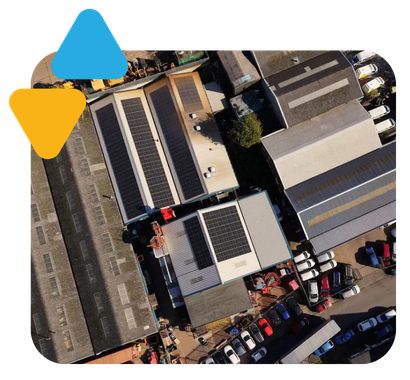
In 2002, Maybrey Precision Castings of Lower Sydenham was acquired and merged into the Hills operation, consolidating three production sites into one. That facility is now at Unit 2, Old Mill Lane, Aylesford, in Kent where the company has been based since 2020.
Three Generations
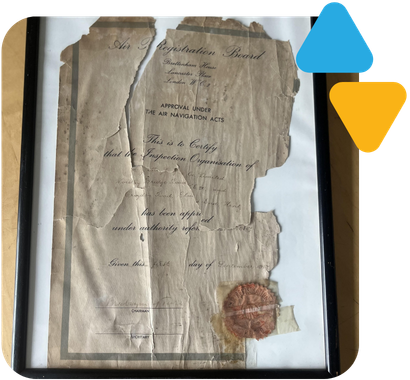
Maybrey today is led by Andrew and Sam Hills, the third generation of the Hills family in foundry work. Some industrial customers have been ordering from the same foundry for more than 25 years. In aerospace, the unbroken certification record runs not to 2002 but to 1937, when the Air Registration Board first approved the foundry for aviation work. Continuity, in the casting trade, is not just a story to tell. It is the product itself.
A Window in Their Honour
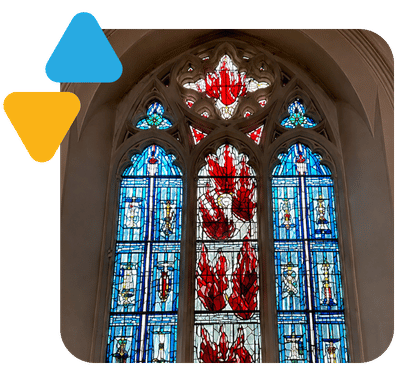
In St George's Church, Beckenham, the parish church that served the communities of South London from which Maybrey's working history grew, there is a stained glass window dedicated to those who worked at the foundry. St George's is a Grade II* listed Victorian church, its windows largely destroyed in the Second World War and replaced in the 1950s and 1960s by the Beckenham artist Thomas Freeth, whose original designs are described by architectural historians as among the finest mid-century stained glass in Kent.
The Archive
Maybrey's website carries one of the most detailed records of George England's locomotive output available anywhere: a register of every known engine built at Hatcham, drawn from contemporary railway press, engineering journals, and the research of Douglas Hills and Grahame Hood.
Then and Now
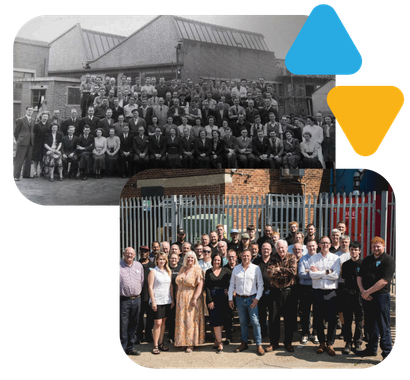
The castings we make today such as aluminium components for aircraft, bronze for landmark sculptures, iron for the restoration of listed buildings are not the same as the locomotives that left Hatcham bound for India and the Welsh Highlands. But the discipline is. Metalwork demands precision, material knowledge, and a willingness to stand behind what you make.
George England built his name on that principle. His foundry no longer stands, but the trade he practised at New Cross is alive in Aylesford. The Hills family made sure of it.
Maybrey Precision Castings Ltd · Founded 1839 · Aylesford, Kent · Part of the Caro Group
HERITAGE TIMELINE
1836
George England begins his research and design work that will become foundational to his future in the world of locomotion and engineering.
1839
George England establishes the Hatcham Iron Works in New Cross, South London. His first products are a patented screw jack and a weaving machine.
1848–49
England's first locomotive is trialled between New Cross and Croydon, reaching 45 mph. His first production engine sells in 1849 - the year Maybrey takes as its founding date.
1851
'Little England' wins the Gold Medal for Excellence at the Great Exhibition in Hyde Park. Castings from Hatcham also appear in the Crystal Palace building itself.
1853–62
The Hatcham Works is extended twice, partly to fulfil a casting contract for the new Crystal Palace at Sydenham. A private test track, 'the cabbage patch', is laid at the rear of the 1862 extension.
1863
Four George England locomotives are delivered to the Ffestiniog Railway in North Wales, the first steam locomotives on a narrow-gauge passenger railway in Britain.
1869
The Hatcham Iron Works builds 'Little Wonder', the first successful Double Fairlie locomotive, for the Ffestiniog Railway. Its 1870 demonstration before international engineers changes narrow-gauge railway design worldwide.
1873–1930s
The Hatcham buildings pass through the Fairlie Engine Company and the General Engine and Boiler Company before becoming home to Reliance Foundry, the direct predecessor of Maybrey's current operation.
1873–1930s
The Hatcham buildings pass through the Fairlie Engine Company and the General Engine and Boiler Company before becoming home to Reliance Foundry, the direct predecessor of Maybrey's current operation.
1937
Reliance Foundry receives its first Air Registration Board approval for aerospace casting. That certification has never lapsed, it is now held as AS9100 Rev D.
1986
Douglas Hills acquires Reliance Foundry. Discovering the George England connection through his brother-in-law Grahame Hood, Douglas begins the research project that produces the Hatcham locomotive archive.
2002
Maybrey Precision Castings is acquired and merged with the Hills operation. Three sites consolidate into one specialist facility.
2024
Maybrey wins Cast Metals Federation Component of the Year for the Black Renaissance silicon bronze sculpture project. The same furnace that once supplied Victorian railways now casts monumental public art for Alabama, USA.
Today
177 years on from first production, Maybrey operates from Aylesford, Kent, as part of the Caro Group, under the Hills family's third generation. Maybrey Precision Castings is aerospace-certified, Carbon Net Zero awarded, and still making things that last.
We can take your casting through to finished component: machined, coated, tested, and ready to fit.